
Pretreatment System & Phosphating
Plant – Autocoat Engineering
Autocoat Engineering manufactures Pretreatment Systems and Phosphating Plants in India — both Dip Pretreatment Plants and Spray Pretreatment Plants for painting and powder coating lines. Covering degreasing, de-rusting, phosphating and passivation — delivering superior paint adhesion and long-term corrosion protection. India’s leading Pretreatment Plant manufacturer with over 30 years of expertise in concept designing, manufacturing, installation, commissioning and training.
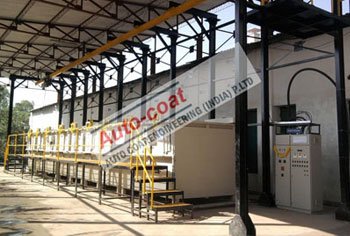
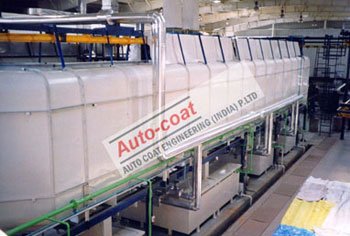
About Pretreatment Systems
Pretreatment Plants and Pretreatment Systems can be defined as a broader area of the pre-cleaning process. The basic theory of pretreating components remains the same — but with the addition of modernisation and sophisticated methods suited to high-production industrial environments. Pretreatment systems are normally used for high-production facilities where a number of different components or jobs need to be pre-cleaned and then sent for powder coating or painting.
The life of a component’s paint or powder coat finish depends fundamentally on how clean the component is before it is sent to painting. In addition to cleaning, a coat of phosphate must be applied to the product for better adhesion of paint to the component — which is why these systems are also known as Phosphating Plants.
A Pretreatment System is a process in which the surface of the component to be painted is chemically cleaned and prepared for the painting operation. Metallic components are freed from impurities using degreasing and de-rusting solutions, coated with a protective layer of phosphates, and passivated for lasting effects.
Autocoat Pretreatment System – Key Features
Autocoat’s Pretreatment Systems and Phosphating Plants are designed and manufactured with the following strengths:
- Dip & Spray ConfigurationsBoth Dip Pretreatment Plants and Spray Pretreatment Plants available — selected as per production volume, space, budget and component type.
- Complete Chemical Pre-CleaningCovers all stages: degreasing, de-rusting, phosphating and passivation — delivering a fully prepared, corrosion-resistant surface for painting or powder coating.
- Painting & Powder Coating CompatibleSuitable for both painting lines and powder coating lines — Autocoat coordinates with customer and chemical supplier to analyse product MOC, chemical pH levels and heat treatment requirements.
- Concept to CommissioningAutocoat’s strengths cover concept designing, manufacturing, installation, commissioning and training — providing a complete turnkey pretreatment system solution.
- Customised DesignsWith vast experience in paint and pretreatment surface finishing techniques, Autocoat provides customised solutions for handling different products — solving de-oiling, de-rusting and phosphating challenges specific to each customer’s components.
- Multi-Stage FlexibilityPre-cleaning process stages can be increased as per the quality condition of the fabricated job — more stages added where components have heavier oil contamination or advanced corrosion.
Dip vs Spray Pretreatment Plants
Phosphating Plants are divided into two main streams — Dip Pretreatment Plants and Spray Pretreatment Plants. The setup is determined by the production requirement:
- Ideal for low production volume facilities
- Suitable where space or budget is limited
- Handles very large components not suitable for conveyors
- Components layered in baskets and dipped through tanks
- Can handle components stored longer with rust & machine oil
- Stages can be increased as per contamination level
- Lower initial investment required
- Ideal for high-volume daily production requirements
- Suitable for standard components with consistent dimensions
- Higher financial investment required for installation
- Lower manpower usage — consistent quality output
- Integrated with conveyor for continuous production flow
- Automated spray of degreasing, phosphating chemicals
- Better suited for painting and powder coating lines
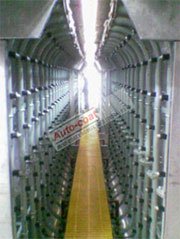
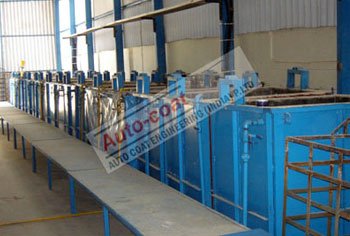
Autocoat Engineering has been part of the painting, pretreatment for powder coating and pretreatment for painting industry for more than 30 years — with a variety of designs and pretreatment plant specifications to achieve the best output. Autocoat has a vast experience in manufacturing of spray pretreatment systems. Concept designing, manufacturing, installation, commissioning and training are the strengths of Autocoat Engineering — with all de-oil, de-rust, phosphate coat related problems solved through a customised approach for handling different products.
Three Core Chemical Stages of Pretreatment
The pretreatment process involves three primary chemical stages that prepare the metal surface for painting or powder coating:
Complete Pretreatment Process – Stage by Stage
The complete pretreatment and phosphating process for painting and powder coating proceeds through the following systematic stages:
DEGREASING
Removal of grease, oil and contaminants from the component surface. Can be achieved by hot water/steam spray, tri-chloroethylene degreasing or alkali degreasing. This is the most critical stage — complete oil removal is essential before painting or powder coating.
WATER RINSE
One or two water rinses to remove all traces of degreasing solution (alkali) remaining on the component surface before the next stage.
PICKLING / DE-RUSTING
Rust and scales are removed using dilute hydrochloric or sulphuric acid with an inhibitor. This is equally critical as degreasing — before painting, the surface must be completely free from both oil and rust.
WATER RINSE
One or two water rinses to remove all traces of pickling acid from the component surface before phosphating.
PHOSPHATING / CHROMATISING
The clean metal surface is coated with a thin layer of phosphate or chromate salt. This phosphate coat becomes an integral part of the product — significantly improving paint adhesion and providing a barrier against rust creep beneath the paint film.
WATER RINSE
One or two rinses to remove all traces of phosphating/chromatising solution before passivation.
PASSIVATING
The phosphated surface is chemically very clean and highly susceptible to immediate rusting unless passivated. Components are treated in hot chromic acid solution which passivates the phosphated surface and protects it from rusting for 12 to 24 hours — until the components are ready for painting or powder coating. This need to provide surface protection after cleaning is essential for lasting paint finish durability.
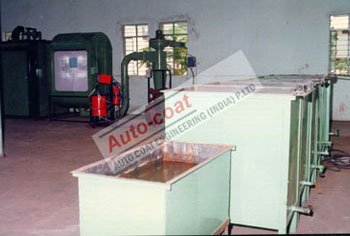
Why Phosphating Matters for Paint Durability
The general belief in the past was that all that mattered to the finish of a component was the paint alone — and that the durability of the finish could be improved by merely applying more coats or a thicker one. This belief leads to early paint failure and costly rework.
The correct approach is to first recognise the need to provide surface protection for the component after cleaning. This is achieved by treating the cleaned surface in suitable phosphating solutions — whereby a certain thickness of a protective phosphate coat is formed which prevents rust formation and rust creep beneath the paint or powder coat film. In the pretreatment or surface protection stage, the Phosphating/Chromatising operation provides this protective coat. A passivating operation then follows to make the phosphate coat less active, further reducing chances of rust formation before painting.
Key Benefits & Why Choose Autocoat
Superior Paint Adhesion
The phosphate coat formed during pretreatment becomes an integral part of the product surface — making it far more adaptive to the paint or powder coating applied over it, dramatically reducing rejection and rework.
Corrosion Protection
The phosphate and passivation stages prevent rust formation and rust creep beneath the paint film — extending the life of the paint finish and protecting the component from premature corrosion failure.
Concept to Commissioning
Autocoat’s complete service covers concept designing, manufacturing, installation, commissioning and operator training — ensuring a fully working, optimised pretreatment system from day one.
Customised for Your Product
With vast experience in surface finishing techniques, Autocoat provides customised solutions for handling different products — coordinating with customers and chemical suppliers to solve de-oiling, de-rusting and phosphating challenges unique to each component.
Dip vs Spray Pretreatment – Comparison
| Parameter | Dip Pretreatment Plant | Spray Pretreatment Plant |
|---|---|---|
| Production Volume | Low to medium volume | High volume — daily mass production |
| Component Type | All sizes incl. very large components | Standard components with consistent size |
| Space Requirement | Lower — suitable where space is limited | Larger footprint — tunnel or line layout |
| Investment Cost | Lower initial investment | Higher financial investment required |
| Manpower | More manual handling | Lower manpower — more automated |
| Quality Consistency | Good — manual control | Excellent — consistent automated quality |
| Conveyor Integration | Not required | Integrated with conveyor for flow production |
| Component Storage | Can handle rusty, oily stored components | Best for fresh-manufactured components |
| Chemical Stages | Stages adjustable as per contamination | Fixed stages per design |
| Best For | Fabrication shops, large/complex parts | Mass production painting & powder coating lines |
Pretreatment System Applications
Autocoat Pretreatment Systems and Phosphating Plants are used across a wide range of industries: