
Aircraft Spray Booth & Helicopter
Paint Booth – Autocoat Engineering
Autocoat Engineering manufactures high-technology Aircraft Spray Booths and Helicopter Paint Booths in India — featuring multi-chamber downdraft exhaust, two-stage plenum systems, sub-5-micron ceiling filters, and dedicated chiller, humidifier and de-humidifier units to maintain precise 20°C temperature and 60% humidity for high-performance aviation paint application. Also supplied to Indian government companies for aircraft repair and revamping.
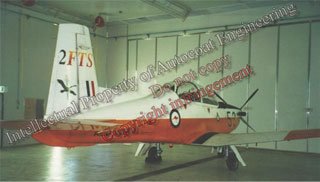
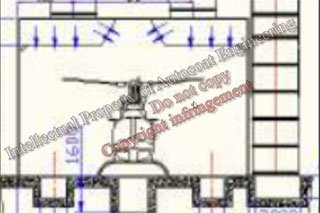
About Aircraft & Helicopter Spray Booths
Aircraft and helicopters are highly specialised machines — used for transportation of humans, carrying goods or for combat. An aircraft is a machine that is able to fly by gaining support from the air, countering the force of gravity by using either static lift, the dynamic lift of an airfoil, or in some cases the downward thrust from jet engines. Helicopters (rotorcraft) use a spinning rotor with aerofoil-section blades to provide lift — by tilting the rotor forward, the downward flow is tilted backward, producing thrust for forward flight.
The spray painting booths used for such complex machines are commonly called Aircraft Spray Booths or Helicopter Paint Booths. Due to the flying speciality of aeroplanes at high altitudes and in cloudy weather, the paint used on the aircraft body must be of a high-performance type. Since most aircraft are manufactured in western countries or Europe, the high-performance paints are also produced by companies from those regions — making correct application conditions critical to paint performance and longevity.
Aircraft paint booths are not as simple as bus paint booths or railway spray booths — in fact, these are extremely high-tech booths with multiple critical systems that must work in precise coordination to achieve the required paint finish quality and durability.
Aircraft Spray Booth – Technical Construction
The Autocoat aircraft spray booth is constructed with the following highly specialised technical systems:
- Multiple Exhaust ChambersMultiple exhaust chambers arranged in groups at equidistant positions throughout the booth for uniform air extraction across the full aircraft length.
- Deep Civil Pit with Air Suction VentsA deep structural civil pit with air suction vents and extraction sections connected to the spray booth exhaust chambers — forming the downdraft exhaust system.
- Multiple Air Circulation BlowersMultiple sets of air circulation blowers connected to the plenum chamber of the paint booth for high-volume, controlled air distribution from ceiling to floor.
- Two-Stage Plenum ChamberPlenum divided into two stages — Stage 1 with multiple air throttling dampers for accurate air velocity throughout the booth; Stage 2 with long rows of ceiling filters for final air conditioning.
- Sub-5-Micron Ceiling FiltersLong rows of ceiling filters with dust-carrying capacity of less than 5 microns — placed adjacent to each other with short grills for maintenance and replacement, eliminating paint failure due to external dust.
- Chiller, Humidifier & De-Humidifier UnitsSeparate chiller, humidifier and de-humidifier units maintain the booth at precisely 20°C temperature and 60% humidity — the critical conditions required for high-performance aviation paint application.
Two-Stage Plenum System – Design Detail
The plenum chambers and circulation blowers are connected in a specific way to deliver precise, uniform airflow throughout the entire aircraft spray booth:
- Multiple air throttling dampers installed
- Provides accurate air velocities throughout the booth
- Ensures uniform airflow across the entire aircraft length
- Prevents localised high/low velocity zones
- Critical for consistent paint application quality
- Long rows of ceiling filters placed adjacent to each other
- Short grills provided for easy maintenance and replacement
- Sub-5-micron dust carrying capacity
- Distributed air passes through ceiling filters uniformly
- Eliminates paint failure caused by external airborne dust
The air in the aircraft spray booth must be maintained at a temperature of 20°C and a humidity of 60% throughout the painting process. This is achieved through a series of separate chiller, humidifier and de-humidifier units. Since every region has different weather and relative humidity that constantly changes month to month, maintaining these precise conditions in the paint booth can be very expensive in terms of running costs. Autocoat Engineering, with its counterpart, has developed latest methods to achieve energy consumption savings in these systems — providing significant relief to customers.
Compliance & Key Benefits
A correctly designed and installed Autocoat Aircraft Spray Booth fulfils all of the following critical requirements:
Operator Safety
Controlled downdraft airflow continuously moves solvent fumes and paint overspray away from the painter’s breathing zone throughout the entire aircraft painting process — meeting safety standards.
Fire Safety
Efficient downdraft exhaust of flammable solvent vapours from high-performance aviation paints eliminates fire risk in and around the aircraft spray painting area at all times.
Pollution Norms
Paint booths are crafted with special care keeping in mind local pollution law department requirements — ensuring all overspray particulate is captured before exhaust air is released to atmosphere.
Aviation Paint Performance
Precise 20°C temperature and 60% humidity conditions ensure imported high-performance aviation paints are applied correctly — delivering the required all-weather and salty-atmosphere durability.
Aircraft Spray Booth vs Standard Paint Booth – Comparison
| Feature | Aircraft / Helicopter Spray Booth | Standard Industrial Paint Booth |
|---|---|---|
| Airflow System | Precision downdraft — multi-chamber exhaust | Side draft / downdraft / cross-flow |
| Exhaust Chambers | Multiple groups at equidistant positions | Single or dual exhaust |
| Civil Pit | Deep pit with air suction vents & sections | Minimal or none (dry type) |
| Plenum System | 2-Stage — throttling dampers + ceiling filters | Single-stage or basic plenum |
| Ceiling Filters | Sub-5-micron dust carrying capacity | Standard filtration |
| Temperature Control | Chiller unit — precise 20°C | Not required |
| Humidity Control | Humidifier + De-humidifier — 60% RH | Not required |
| Paint Type | High-performance aviation paints | Standard industrial paints |
| Complexity | Extremely high-tech | Moderate |
| Capital Cost | High — due to climate control systems | Moderate to Low |
Aircraft Spray Booth Applications
Autocoat Aircraft Spray Booths and Helicopter Paint Booths are suitable for the following applications:
Autocoat Engineering has also supplied aircraft spray booths to Indian government companies for the repair and revamping work of used Indian aeroplanes. The paint booths used for repair and revamping work are much simpler than those used for the first-time painting of new aircraft, while still meeting all safety and pollution requirements. All Autocoat paint booths are crafted with special care keeping in mind the final requirements of the customers and the local pollution law departments.
Since every region has different weather, relative humidity and temperature that constantly change every month, the running of aircraft paint booths with chillers and climate control systems can be very expensive. Autocoat Engineering, with its counterpart, has developed the latest methods to achieve savings in energy consumption costs — providing significant financial relief to customers operating aircraft spray booths. Contact Autocoat Engineering for in-depth designs, construction plans and energy-saving solutions.