
Oil Booth & Oil Spray Booth
– Autocoat Engineering
Autocoat Engineering manufactures customised Oil Spray Booths — a newer, more efficient application of spraying oil instead of dip-oiling for temporary corrosion prevention of automobile parts and components for 30, 60 days or more. Features high-powered exhaust to reduce TLVC, built-in oil recovery and recycling systems, and enclosed chamber design for operator safety and environmental compliance. India’s most experienced Oil Spray Booth manufacturer since 1985.
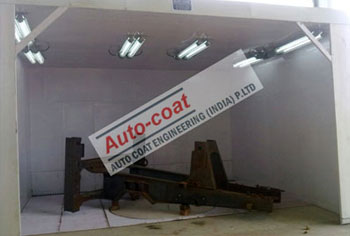
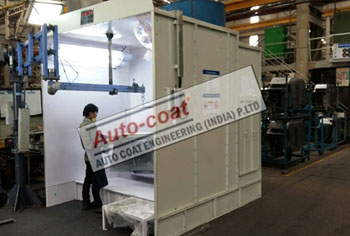
About Oil Spray Booths
An Oil Booth is a newer application of spraying oil — instead of dip-oiling — in an enclosed chamber to protect automobile parts or other components from temporary corrosion. This method prevents oxidation for 30 days, 60 days or more — making it an essential tool for companies that need to shift raw components or finished components from one factory to another, where the product may be in transit and exposed to rust or oxidation.
In an Oil Booth, a high-powered exhaust system carries away excess sprayed oil and exhausts it to reduce TLVC (Threshold Limited Value) — thus reducing fire hazard and ensuring operator comfort for breathing. The second major aspect of an Oil Spray Booth is the ability to recover and recycle oil, which provides significant economies in overall oiling cost.
Autocoat Engineering plans and implements systematic oiling booth activities within a quality management system to achieve high-standard quality and monitor activities by professionals. Autocoat’s Oil Spraying Booth design is the result of long years of expert experience — crafted to suit the specific needs of each customer with customised designs and oil spraying solutions.
Autocoat Oil Spray Booth – Key Features
Autocoat’s Oil Spray Booths are designed with the following key features for safe, efficient and economical oil application:
- High-Powered Exhaust SystemCarries excess sprayed oil and reduces TLVC (Threshold Limited Value) — minimising fire hazard and providing operator breathing comfort throughout the oil spraying process.
- Oil Recovery & Recycling SystemBuilt-in oil recovery system collects and recycles excess sprayed oil — reducing oil consumption cost and providing faster payback compared to dip-oiling methods.
- Enclosed Chamber DesignFully enclosed oil spraying chamber prevents oil mist from spreading to neighbouring workstations — maintaining a clean, pleasant working environment throughout the facility.
- Customised Design & SolutionEvery Oil Spraying Booth is customised to suit the specific needs of the customer — including component size, production volume, material handling configuration and oil type.
- Temporary Corrosion PreventionProtects automobile parts and components from rust and oxidation for 30, 60 days or more — essential for inter-factory component transit and storage.
- Compact & Lower Cost InstallationCompact installation space, no wastewater treatment equipment required, and no special installation permits needed — resulting in lower overall installation and running costs.
Speciality of Autocoat Oil Spray Booth
The Autocoat Oil Spray Booth design delivers the following specialised advantages that set it apart:
Pleasant Workstation
Clean enclosed environment with reduced solvent concentration — resulting in a safe, comfortable working atmosphere for operators and neighbouring workstation staff. Oil odours are removed efficiently by the exhaust system.
Improved Quality
Recovery of oil and uniform oil coating achieved by the spray method reduces rejection. Adhesion of mist overspray coating defects are prevented, coverage is improved, and larger production volumes become possible.
Environmentally Friendly
Oil odours are removed by the exhaust system — providing comfort to neighbouring workstations. No wastewater treatment equipment is required and no special installation permits are needed, making the booth environmentally compliant.
Less Maintenance
No need for wastewater treatment equipment and no special installation permits are required — resulting in a simpler, lower-maintenance system that is easy to operate day to day.
Reduced Cost
Compact installation space and lower initial cost. Recovery of oil is possible. Due to spraying, coverage per sq/metre is less — hence faster payback comparable with the dipping method, making the Oil Spray Booth a cost-effective investment.
Transit Corrosion Protection
Essential for companies shifting raw or finished components from one factory to another — providing reliable temporary corrosion protection for 30, 60 days or more during transit and storage.
Oil Spray Booth vs Dip-Oiling – Comparison
The following comparison highlights why Oil Spray Booths are a superior, more modern alternative to traditional dip-oiling methods:
- Uniform oil coating by spray method
- Oil recovery and recycling system included
- Coverage per sq/metre is optimised — less oil used
- Faster payback compared to dipping
- No wastewater treatment equipment needed
- No special installation permits required
- Compact installation space
- Oil odours removed — pleasant workstation
- Larger production volumes possible
- Reduced coating defects from overspray adhesion
- Non-uniform oil coating — excess or insufficient coverage
- No oil recovery — higher oil consumption cost
- Higher oil usage per component
- Slower return on investment
- May require waste oil collection and disposal
- Larger floor space requirement for dip tanks
- More difficult to scale for higher production
- Oil odour exposure at dip tank workstation
- Drip and drainage management required
- Higher rejection rate due to uneven coating
Autocoat Engineering makes customised Oil Spraying Booth designs and oil spraying solutions to suit the specific needs of each customer. We plan and implement systematic oiling booth activities within a quality management system — ensuring high-standard quality and monitoring of all activities by professionals. With 35+ years of expertise in oil spray booth and paint booth manufacturing, Autocoat’s designs cover different material handling configurations, different product sizes and different production volumes.
Compliance & Safety Standards
A correctly designed and installed Autocoat Oil Spray Booth fulfils all of the following requirements:
Operator Safety
High-powered exhaust system reduces TLVC (Threshold Limited Value) of oil vapours and mist — ensuring operator breathing comfort and a safe working environment throughout the oil spraying process.
Fire Safety
Excess sprayed oil and vapours are efficiently exhausted by the high-powered exhaust system — reducing TLVC and thereby reducing fire hazard in and around the oil spray booth area.
Environmental Compliance
Oil odours and vapours are removed by the exhaust system — providing comfort to neighbouring workstations. No wastewater treatment equipment or special installation permits required.
Quality of Oil Coating
Enclosed spray method delivers uniform oil coverage per square metre — reducing rejection rates, preventing coating defects from overspray adhesion, and improving overall quality of corrosion protection.
Oil Booth – Technical Comparison Table
| Parameter | Autocoat Oil Spray Booth | Dip-Oiling Method |
|---|---|---|
| Oil Application Method | Spray — uniform, controlled coverage | Dipping — uneven, excess oil |
| Oil Recovery | Yes — recovered and recycled | No — oil waste not recovered |
| Oil Consumption | Lower — spray coverage per sq/metre optimised | Higher — excess oil per component |
| TLVC / Fire Risk | Reduced — high-powered exhaust system | Higher exposure at dip tank |
| Operator Comfort | Pleasant — oil odours exhausted | Exposed to oil odours at dip tank |
| Wastewater Treatment | Not required | May be required |
| Installation Permits | No special permits needed | May require permits for dip tanks |
| Coating Quality | Uniform — reduced rejection | Non-uniform — higher rejection |
| Installation Space | Compact | Larger — dip tank footprint |
| Payback Period | Faster — due to oil recovery & lower usage | Slower |
Oil Spray Booth Applications
Autocoat Oil Spray Booths are used across a wide range of industries where temporary corrosion prevention of components is required: